Fiction Studio
Support a writer’s natural creative work while keeping the story in ordinary files they own.
The writer’s work is the starting point
Fiction writing moves between possibilities, decisions and prose. A useful environment needs to support those different activities without quietly treating every idea as a settled part of the story.
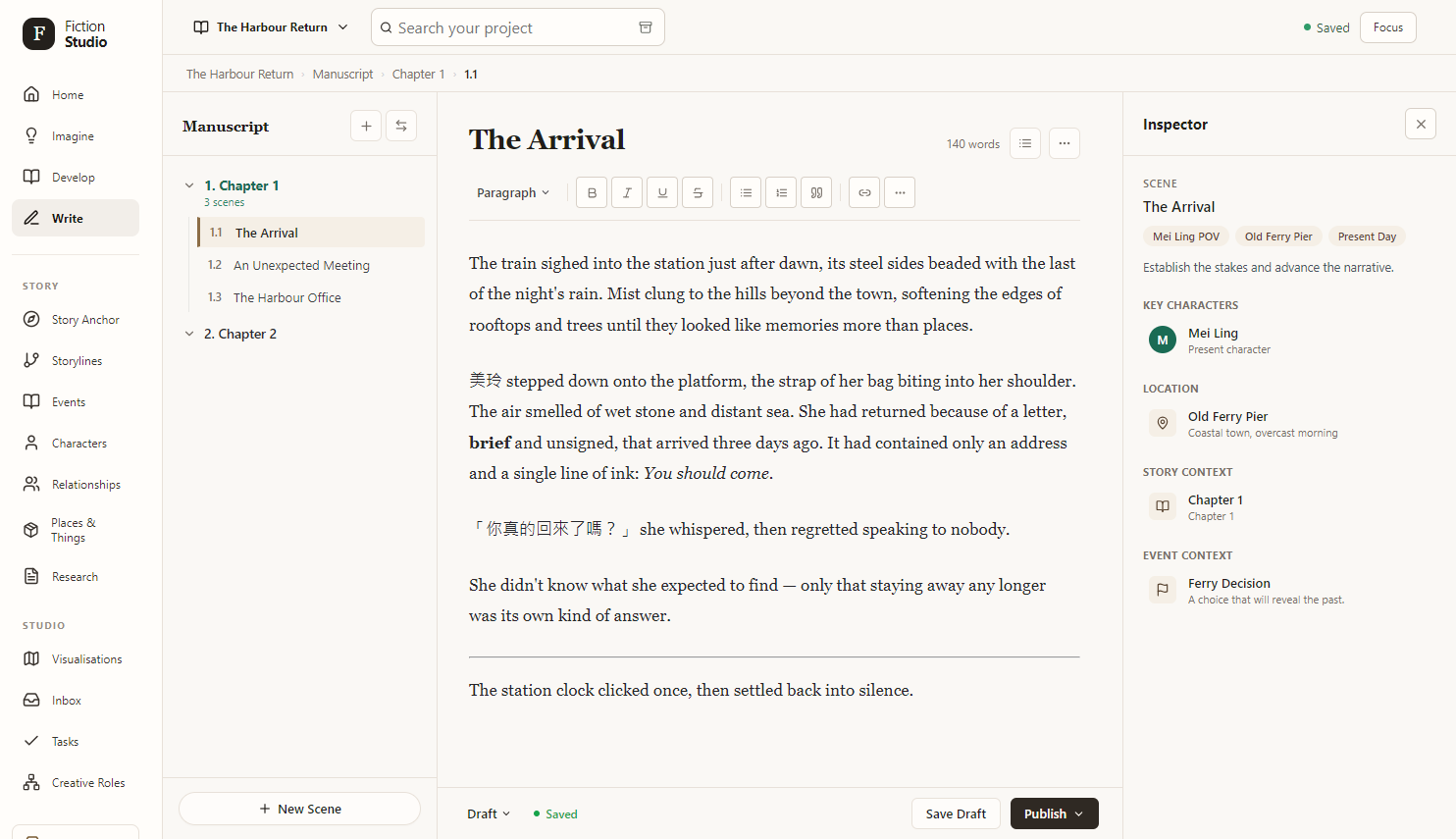
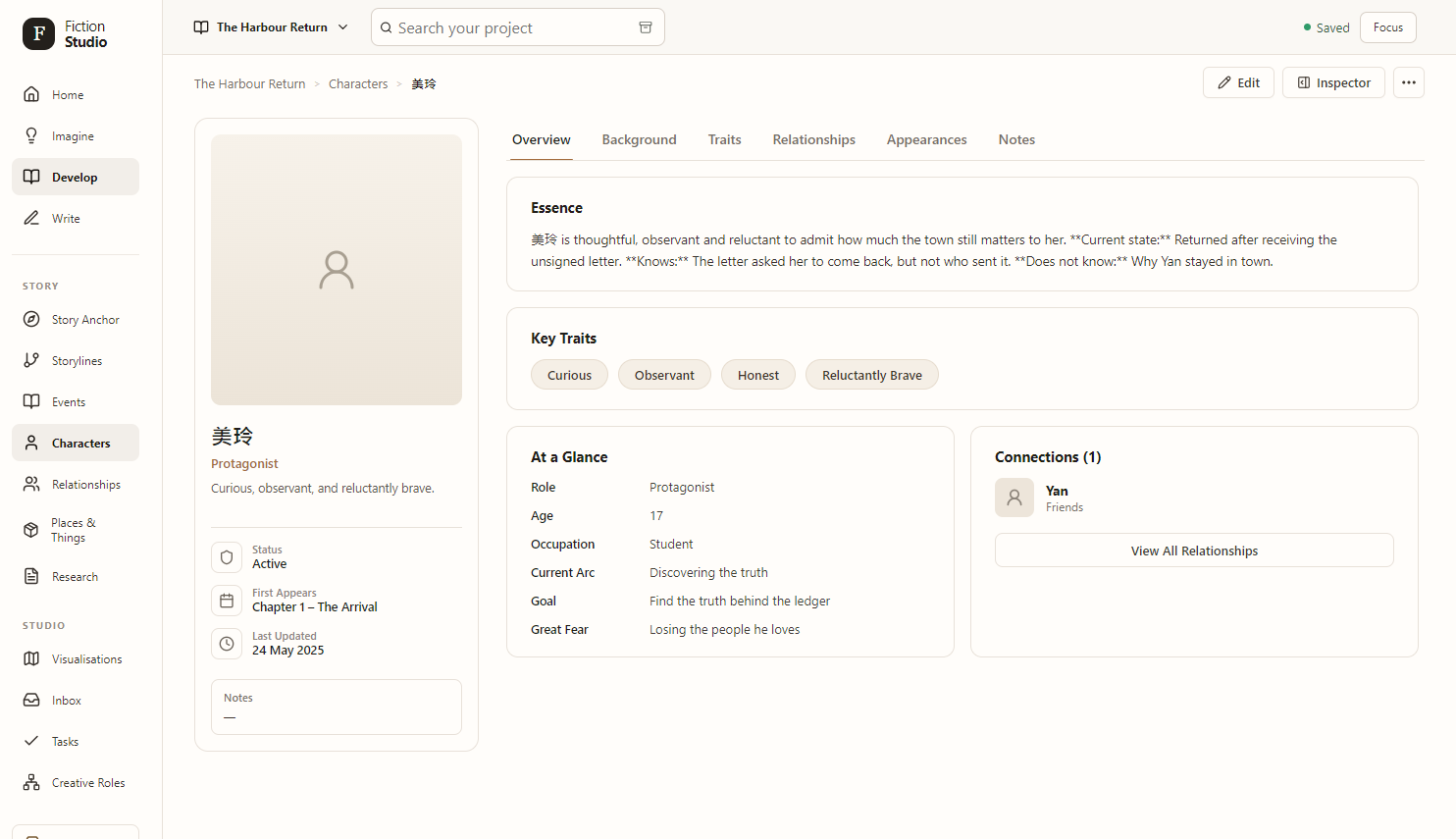
Fiction Studio is a local-first Windows desktop application built around a Markdown story vault. Manuscript, characters, story development and visualisation have dedicated spaces, while the underlying material remains readable in other compatible tools.
Ordinary files are a product decision
The vault is made of ordinary Markdown files with structured information where it is needed. This is not simply a technical preference. It keeps the writer’s work accessible beyond the application.
That choice also creates responsibilities. Editing, saving, refreshing and recognising changed content have to agree about what the files contain. A calm writing interface depends on reliable behaviour beneath it.
Ray is a choice, not a prerequisite
Ray is the optional creative partner. The current distribution provides portable skills that the writer can explicitly install in a compatible local AI assistant. Fiction Studio remains usable without Ray.
The application does not supply an AI model, embedded chat, a cloud account or automatic permission to change story files. That distinction matters: the writer chooses a partner and remains responsible for deciding what becomes part of the work.
The lesson beneath the quiet interface
Design consistency became more than matching colours. If similar controls save differently or use different language for the same activity, the writer has to keep relearning the application. Shared behaviour is part of a coherent product.
The manuscript view here uses fictional material from development. It shows a moment in the writing process, while questions about saving and returning to the work need to be checked across the whole journey. A screen alone cannot tell me whether that journey is dependable.